
Digital Marketing for Beginners: A Complete Guide to Growing Your Online Business
Published October 19, 2026
Introduction
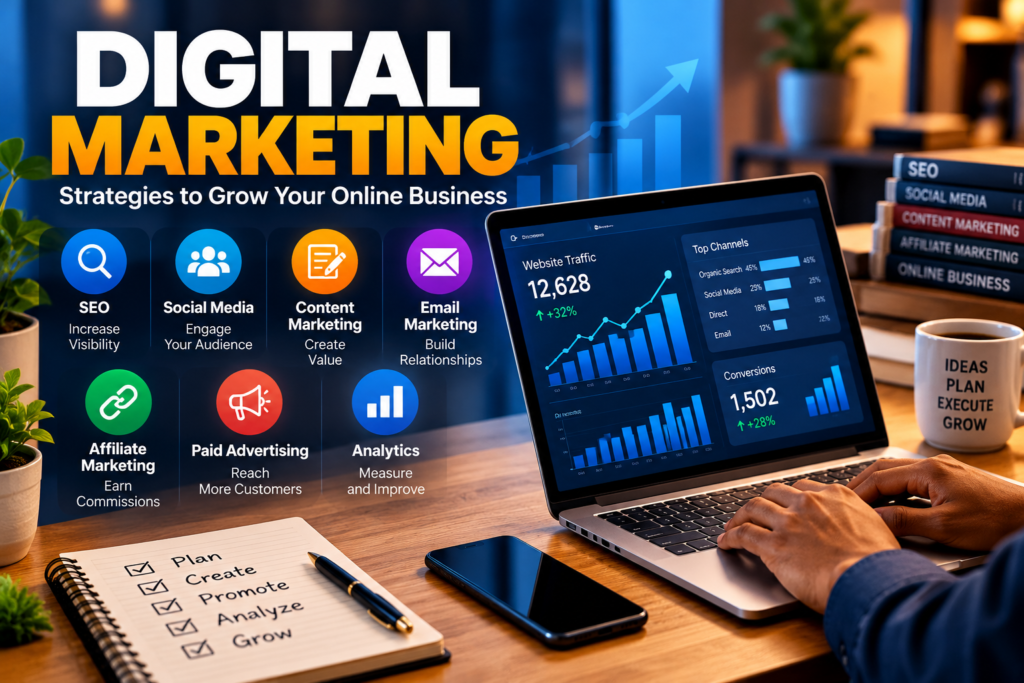
Digital marketing has become one of the most important ways for businesses, entrepreneurs, and individuals to reach customers online. Whether you own a small business, run a website, or want to build an online income stream, learning digital marketing can help you reach a wider audience and grow your online presence.
The good news is that beginners can start learning digital marketing with basic tools, consistent effort, and a clear strategy. In this guide, you will discover what digital marketing is, the main types of digital marketing, and how to get started.
What Is Digital Marketing?
Digital marketing is the process of promoting products, services, or brands through digital channels such as websites, search engines, social media, email, and online advertising.
Unlike traditional marketing, digital marketing allows businesses to reach specific audiences, measure campaign performance, and improve their strategies using data.
For example, a website owner can publish helpful articles, attract visitors through Google, and earn income through affiliate marketing, advertising, or selling digital products.
1. Search Engine Optimization (SEO)
Search Engine Optimization, commonly known as SEO, helps your website appear in search engine results when people look for information related to your content.
SEO involves several important practices:
- Researching relevant keywords.
- Writing useful, original content.
- Creating clear page titles and headings.
- Improving website speed and mobile usability.
- Building a well-organized website structure.
For beginners, a good starting point is to create articles that answer real questions people are searching for. Over time, quality content can help attract visitors from search engines.
2. Social Media Marketing
Social media marketing involves using platforms such as Facebook, Instagram, TikTok, LinkedIn, and YouTube to share content, connect with audiences, and promote products or services.
You do not need to use every platform. Instead, choose the platforms that best match your target audience and content.
For example, a digital marketing website can share practical tips, short tutorials, business ideas, and links to useful blog articles.
Consistency and valuable content are often more important than simply posting every day.
3. Content Marketing
Content marketing focuses on creating and sharing helpful information to attract and engage an audience.
Common content formats include:
- Blog posts and articles.
- Educational videos.
- Tutorials and guides.
- Infographics.
- E-books and downloadable resources.
A successful content marketing strategy focuses on helping readers solve problems rather than constantly promoting products.
For a website like CmohaMarketer, publishing useful guides about online business, affiliate marketing, digital tools, and self-publishing can help build trust with readers.
4. Email Marketing
Email marketing allows businesses to communicate directly with people who have chosen to receive their messages.
You can use email to share new articles, provide useful tips, introduce products, and keep your audience informed.
To begin, create a simple sign-up form on your website and offer something valuable, such as a free beginner’s guide or checklist.
Always obtain permission before sending marketing emails and provide a clear way for subscribers to unsubscribe.
5. Affiliate Marketing
Affiliate marketing is a business model in which you promote another company’s products or services and may earn a commission when someone makes a qualifying purchase through your unique affiliate link.
A beginner can get started by choosing a niche, creating helpful content, joining a suitable affiliate program, and recommending products that genuinely match the audience’s needs.
For example, you could write a comparison of website hosting services or review useful tools for online businesses.
Always disclose affiliate relationships clearly. Remember that commissions are not guaranteed, and program requirements and payment availability vary.
6. Paid Advertising
Paid advertising allows businesses to promote their products or services through platforms such as Google Ads and social media advertising networks.
Businesses can use paid campaigns to reach specific audiences, test offers, and generate website traffic.
However, paid advertising involves financial risk. Beginners should understand their target audience, set a clear budget, and measure results before increasing spending.
It is wise to start with a small, affordable test rather than spending money without a defined goal.
How to Start Digital Marketing as a Beginner
You can begin learning digital marketing by following these practical steps:
Step 1: Choose a niche.
Focus on a subject you understand or are willing to research, such as online business, technology, fitness, education, or personal finance.
Step 2: Define your audience.
Think about the people you want to help, the questions they ask, and the problems they want to solve.
Step 3: Build your online presence.
Create a website or choose a suitable social media platform where you can publish useful content.
Step 4: Publish quality content.
Start with a few well-researched articles that answer common questions in your niche. Make your content clear, original, and easy to read.
Step 5: Learn basic SEO.
Use descriptive titles, relevant keywords, clear headings, and internal links to help readers and search engines understand your content.
Step 6: Choose a monetization method.
Depending on your goals, you could explore affiliate marketing, digital products, advertising, or services. Review each platform’s eligibility, terms, and payment options before investing time or money.
Step 7: Track your progress.
Use tools such as Google Analytics and Google Search Console to understand website traffic, search visibility, and which content performs best.
Step 8: Improve your strategy.
Review your results regularly and update your content based on what your audience finds useful.
Common Digital Marketing Mistakes to Avoid
Many beginners make avoidable mistakes when starting their online journey.
Here are some important ones to watch out for:
- Expecting immediate results without consistent effort.
- Publishing low-quality or copied content.
- Targeting too many unrelated niches at once.
- Spending money on advertising without a clear plan.
- Ignoring mobile users and website usability.
- Promoting products without checking their quality.
- Failing to measure performance and learn from results.
Digital marketing takes time to master. Focus on building skills, helping your audience, and improving your strategy instead of looking for guaranteed shortcuts.
Final Thoughts
Digital marketing offers opportunities for individuals and businesses to build an online presence, connect with customers, and explore different ways to earn income.
The best approach for beginners is to start with one clear goal, learn the fundamentals, and take consistent action. You do not need to master every marketing channel at once. Choose the methods that fit your audience and resources, then improve as you gain experience.
At CmohaMarketer, our goal is to help you discover practical digital marketing strategies, explore online business opportunities, and develop the knowledge needed to grow your online journey.
Start learning today, keep creating valuable content, and remember that sustainable progress comes from patience, practice, and continuous improvement.