
KDP & Self-Publishing: A Beginner’s Guide to Publishing Books Online
Published October 22, 2026
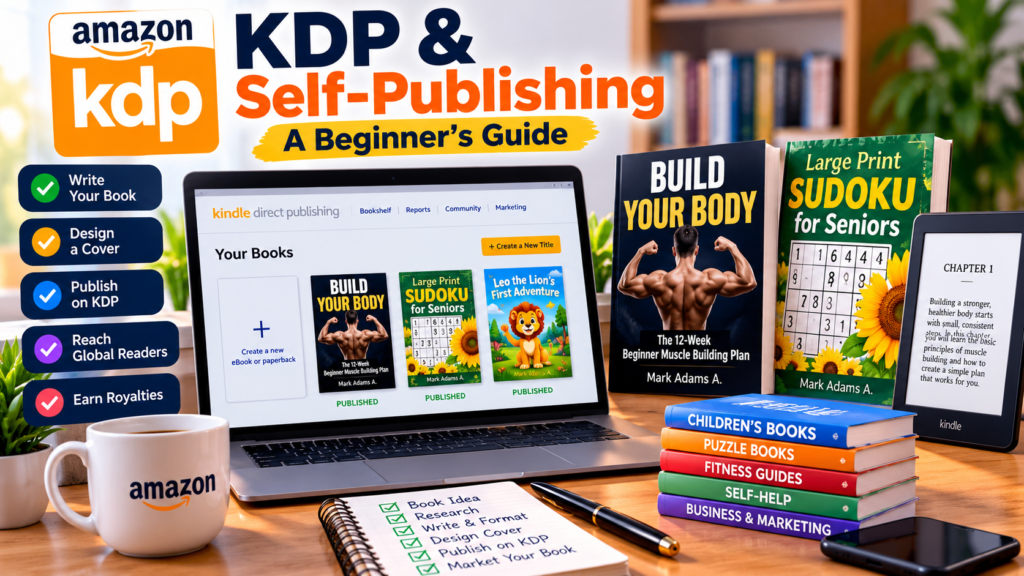
Have you ever dreamed of becoming an author and earning money from your own books? Thanks to digital publishing platforms, you no longer need a traditional publishing company to turn your ideas into published books. With Amazon Kindle Direct Publishing (KDP), beginners can publish books online and make them available to readers around the world.
In this guide, you will learn what KDP and self-publishing mean, how they work, and how to get started with your first book.
What Is Amazon KDP?
Amazon Kindle Direct Publishing (KDP) is a self-publishing platform that allows authors to publish ebooks and paperback books through Amazon. Authors can upload their manuscripts, design their covers, set prices, and make their books available to customers.
One of the main advantages of KDP is that publishing a book does not normally require an upfront publishing fee. However, you may spend money on editing, book design, advertising, or other services if you choose to use them.
KDP offers different publishing formats, including Kindle ebooks, paperbacks, and hardcover books where supported.
What Is Self-Publishing?
Self-publishing means publishing your own book without relying on a traditional publishing company to manage the entire process.
As a self-published author, you take responsibility for preparing your book, creating its cover, choosing its price, and promoting it to potential readers.
This approach gives you greater creative control over your work. It also allows you to publish books on topics you understand or enjoy, such as fitness, education, children’s activities, puzzles, personal development, and business.
How to Start Publishing Books on Amazon KDP
Getting started with KDP becomes easier when you follow a clear process.
1. Choose a Book Idea
Begin by selecting a topic that has a clear audience. Think about the problems readers want to solve or the activities they enjoy.
Examples of book ideas include:
- Beginner fitness and workout guides
- Large-print Sudoku and puzzle books
- Children’s coloring and activity books
- Personal development guides
- Digital marketing and online business ebooks
Research similar books on Amazon to understand their formats, prices, reader expectations, and competition.
2. Research Your Target Audience
Before creating your book, identify the readers you want to reach.
Ask yourself what they need, what challenges they face, and why they would choose your book over another option.
Amazon search suggestions, bestseller lists, book descriptions, and customer reviews can help you identify potential opportunities. Remember that demand and competition can change, so research several competing books before choosing a niche.
3. Write and Format Your Book
Create useful, original content that meets your readers’ expectations. For a nonfiction book, organize the information into clear chapters. For activity books, make sure the puzzles, illustrations, and instructions are suitable for the intended audience.
Check spelling, grammar, page layout, margins, and image quality before uploading your manuscript.
KDP has specific formatting requirements for ebooks and printed books. Always review the current requirements for your chosen format and trim size.
4. Design a Professional Book Cover
Your book cover is one of the first things potential buyers notice. A clear title, readable typography, and relevant imagery can help your book look professional.
For paperback and hardcover books, the full cover may include the front, spine, and back. The required dimensions depend on factors such as trim size, page count, and paper type.
Use the official KDP cover calculator or template to determine the correct dimensions. Check the final file carefully to avoid problems with margins, spine text, or barcode placement.
5. Publish Your Book on KDP
After preparing your manuscript and cover, create or access your KDP account and complete the publishing details.
You will generally need to:
- Enter your book title and author name.
- Write a clear book description.
- Select appropriate categories and keywords.
- Upload the manuscript and cover files.
- Preview the book and correct any formatting problems.
- Set your price and review the available publishing options.
- Submit the book for review.
Make sure your content, cover, images, and other materials comply with Amazon’s current content guidelines.
6. Set a Suitable Book Price
Your price affects both your ability to attract buyers and the royalties you may earn.
Consider the prices of comparable books, your production costs, your target audience, and the value your book provides.
For printed books, printing costs affect the royalty calculation. Ebook royalties depend on the applicable royalty option and other conditions. Review the current KDP royalty rules before choosing a price.
Avoid setting a price based only on what other authors charge. Your goal should be to offer a competitive book while maintaining a reasonable return.
How Do Authors Make Money With KDP?
Authors can earn royalties when customers purchase their eligible books. The amount depends on the format, list price, marketplace, printing costs where applicable, and the royalty rules for the selected product.
For example, a paperback author does not necessarily receive the entire selling price because printing and other applicable costs may be deducted.
Some authors also use Amazon advertising, Pinterest, search engine optimization (SEO), email marketing, and social media to reach potential readers.
However, publishing a book does not guarantee sales or income. Success often requires research, quality content, consistent promotion, and patience.
How to Promote Your Books Online
Publishing is only one part of the process. Readers need to discover your book before they can buy it.
Here are several ways to promote your books:
Pinterest Marketing: Create attractive pins featuring your book topic, useful tips, or relevant reading ideas. Link each pin to the appropriate book page or a helpful article on your website.
SEO and Blogging: Publish articles related to your book’s subject. For example, if you publish a fitness guide, write helpful articles about beginner workouts, exercise routines, and building healthy habits.
Social Media: Share useful information related to your book instead of posting only sales messages.
Amazon Ads: Consider paid advertising after researching your target audience, profit margins, and advertising costs. Start carefully and monitor the results.
Email Marketing: Build an audience that has chosen to receive your updates, then share useful information and relevant book recommendations.
Use honest promotional messages and avoid promising results that your book cannot guarantee.
Common KDP Mistakes Beginners Should Avoid
New authors sometimes rush to publish without checking their work. Avoid these common mistakes:
- Choosing a topic without researching reader demand.
- Uploading a poorly formatted manuscript.
- Using a low-quality or incorrectly sized cover.
- Selecting irrelevant keywords and categories.
- Publishing content without checking originality and usage rights.
- Spending too much on advertising before testing demand.
- Expecting immediate sales without a promotion strategy.
If you use AI tools to help create a book, carefully review the content and ensure that you follow KDP’s current requirements, including applicable disclosure rules for AI-generated content.
Is Amazon KDP Worth Trying in 2026?
Amazon KDP can be a useful option for people who want to explore self-publishing with relatively low initial publishing costs. It provides access to Amazon’s book marketplace and allows authors to publish different types of books.
Nevertheless, KDP is a business opportunity, not a guaranteed way to make money. Results vary according to the quality of your books, niche selection, competition, marketing, and customer demand.
A sensible approach is to begin with one well-researched book, learn the publishing process, study the results, and improve your next release.
Final Thoughts
KDP and self-publishing have made it easier for independent authors to share their ideas with readers around the world. Whether you want to create ebooks, fitness guides, children’s activity books, or puzzle books, the key is to understand your audience and produce something valuable.
Start with a clear plan, prepare your book carefully, follow Amazon’s publishing requirements, and promote your work consistently.
Ready to begin your self-publishing journey? Explore your book ideas, research your market, and take the first step toward publishing your own book online.
Disclaimer: This article is for educational purposes only. Publishing through KDP does not guarantee sales or income. Always check Amazon KDP’s official guidelines for the latest requirements.